
AI · 6 min read
Agentic marketing is an operating model, not a tool
An AI subscription on its own rarely changes how a team works. Redesigning who does what, and who approves it, usually does.

Some marketing teams I meet share a similar AI story. People have a chatbot open in a tab, a few are very good with it, and the work looks a bit similar to how it did a few months ago, just with faster first drafts.
That's useful, and it's a real start. In my experience, the bigger shift comes when a team moves from asking 'which AI tool should we buy?' to asking 'which jobs in this team could a specialist agent do, and who signs off on its work?'
One chatbot is a generalist. Teams need specialists.
A single assistant asked to plan a campaign, write the copy, check the brand voice and suggest the media mix will usually do all of it reasonably and rarely any of it brilliantly. Marketing teams aren't organised that way for a reason. We have strategists, copywriters, designers and channel leads because each job needs its own focus.
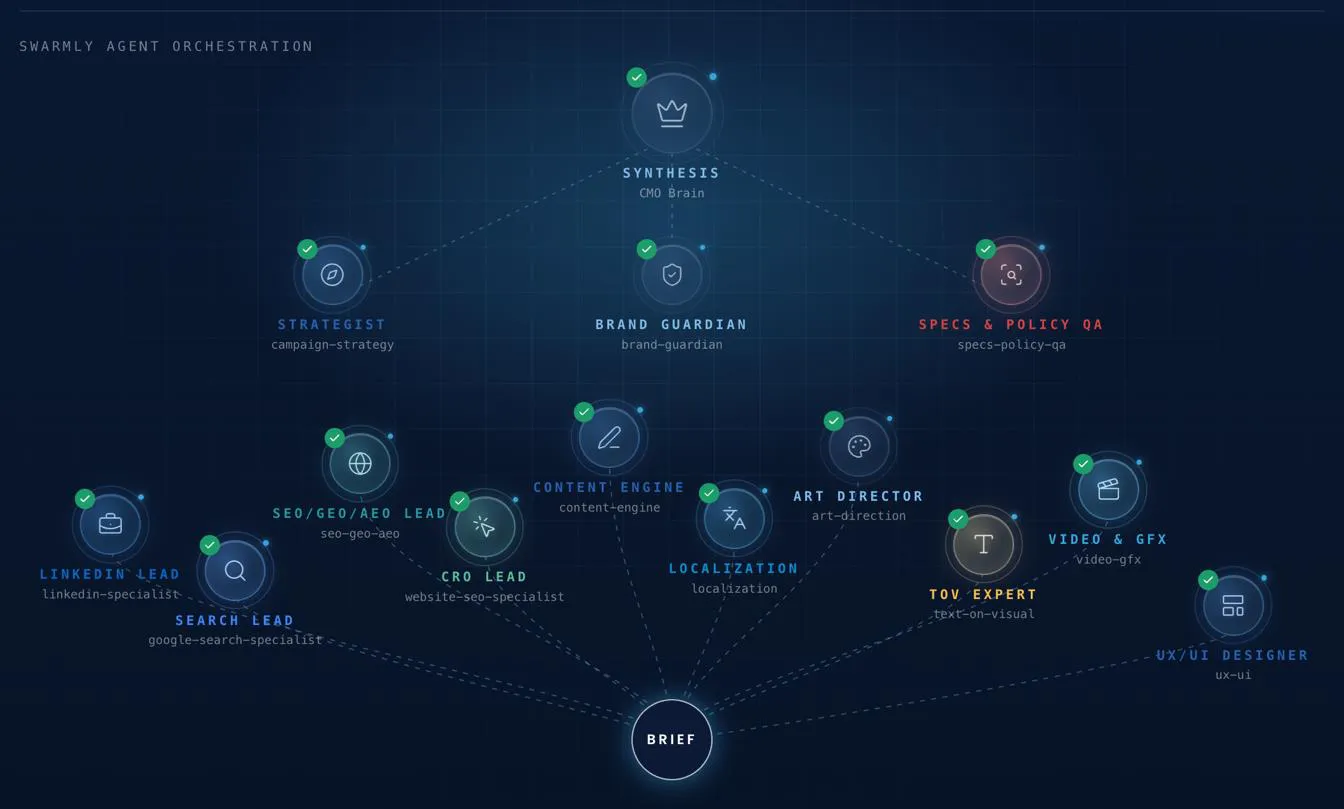
At ADRES we mirrored that structure. A brief goes to an orchestrating agent that breaks it into jobs. A strategist agent shapes the campaign. A search lead works on Google and AI search. A content engine drafts. An art director agent sets visual direction. A brand guardian checks voice and compliance before anything reaches a person.
The agents remove the blank page and the busywork. Judgement stays human.
The approval step is the product
For me, the most important part of an agentic workflow is the moment a person reviews the output. When that step is designed badly, I've seen one of two things happen: people approve work they haven't really read, or they rewrite everything and the agents save very little.
- Show the reviewer the brief next to the output, so they judge it against the goal and not against their taste.
- Make the brand guardian's notes visible. It's faster to accept or reject a flagged line than to hunt for it.
- Log every edit a person makes. Those edits become some of the most useful material for teaching the agents your brand voice.
Start with one workflow, not a transformation programme
What has worked for me is starting with a workflow that repeats every week and that the team would happily hand over: the monthly LinkedIn calendar, campaign briefs for agencies, or first drafts of landing pages. Map who does what today. Replace one step with an agent, keep a person on approval, and measure the time from brief to approved output.
When that number drops and quality holds, add the next step. Over a quarter or so, an operating model takes shape, built from your own evidence rather than a vendor's slide.
What doesn't change
Agents don't know your customers the way your best salesperson does, and they don't own the relationship with your partners. They don't decide what the brand stands for. Those stay with people and leadership. What changes is how much of a marketer's week goes to thinking about those things instead of formatting slides.
Want to talk about this for your team?